
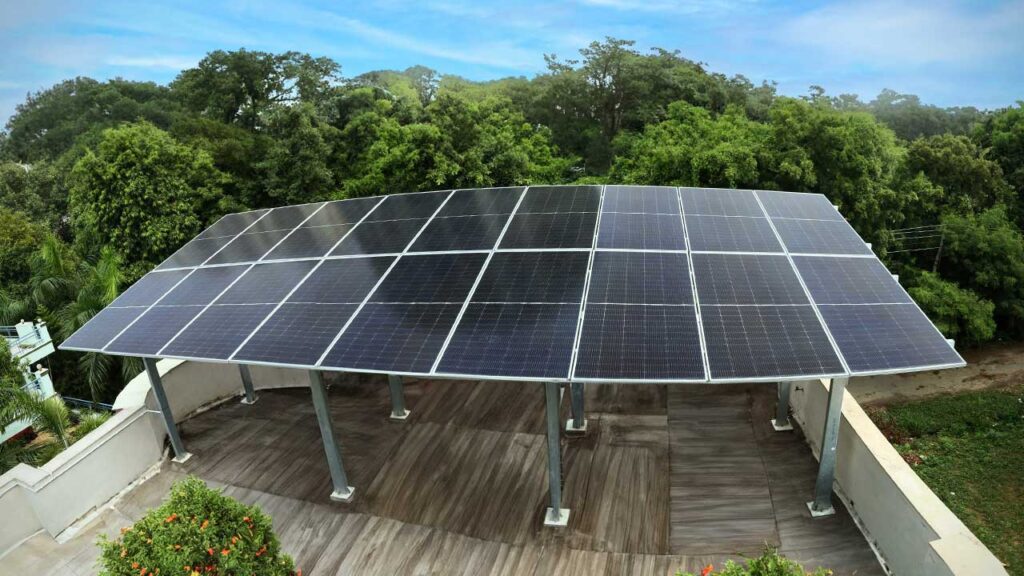
What is a Solar Loan?
A solar loan is a bank loan used to install solar panels on your house roof. In India, the government supports this through schemes like PM Surya Ghar: Muft Bijli Yojana, where people can get loan + subsidy for rooftop solar systems.
The goal is to help households generate their own electricity and reduce electricity bills.
Solar Loan Details
Loan Amount
- Up to ₹2 lakh for solar systems up to 3 kW
- Up to ₹6 lakh for systems 3 kW – 10 kW
Interest Rate
- Around 6% – 10% per year depending on bank and loan size.
Loan Tenure
- Up to 10 years repayment period.
Solar Subsidy (Government Support)
Government gives subsidy to reduce installation cost.
Example subsidy:
- 1 kW system: about ₹30,000
- 2 kW system: about ₹60,000
- 3 kW system: about ₹78,000 subsidy
This subsidy is directly credited to your bank account.
Eligibility for Solar Loan
You must:
- Be an Indian citizen
- Own a house with rooftop space
- Have a valid electricity connection
- Age usually 18–65 years
For systems above 3 kW, some banks require annual income around ₹3 lakh or more.
Documents Required
- Aadhaar Card
- PAN Card
- Electricity bill
- Bank account details
- Income proof (for larger loans)
For small systems (up to 3 kW), only KYC + electricity bill may be required.
How to Apply for Solar Loan
Step-by-Step
- Register on the government solar portal.
- Choose your solar vendor / installer.
- Apply for solar subsidy and bank loan.
- Bank verifies documents.
- Solar system is installed on your roof.
- Subsidy amount is credited to your account.
You can apply through:
- Jan Samarth Portal
- PM Surya Ghar Portal
- Banks like SBI, Bank of Maharashtra, Indian Bank.
✅ Example:
If a 3 kW solar system costs ₹2,00,000
- Government subsidy: about ₹78,000
- Your cost: about ₹1,22,000 (can be financed with loan).